Have you ever heard a bird singing from a rooftop and wondered who it was?
That was me, four years ago.
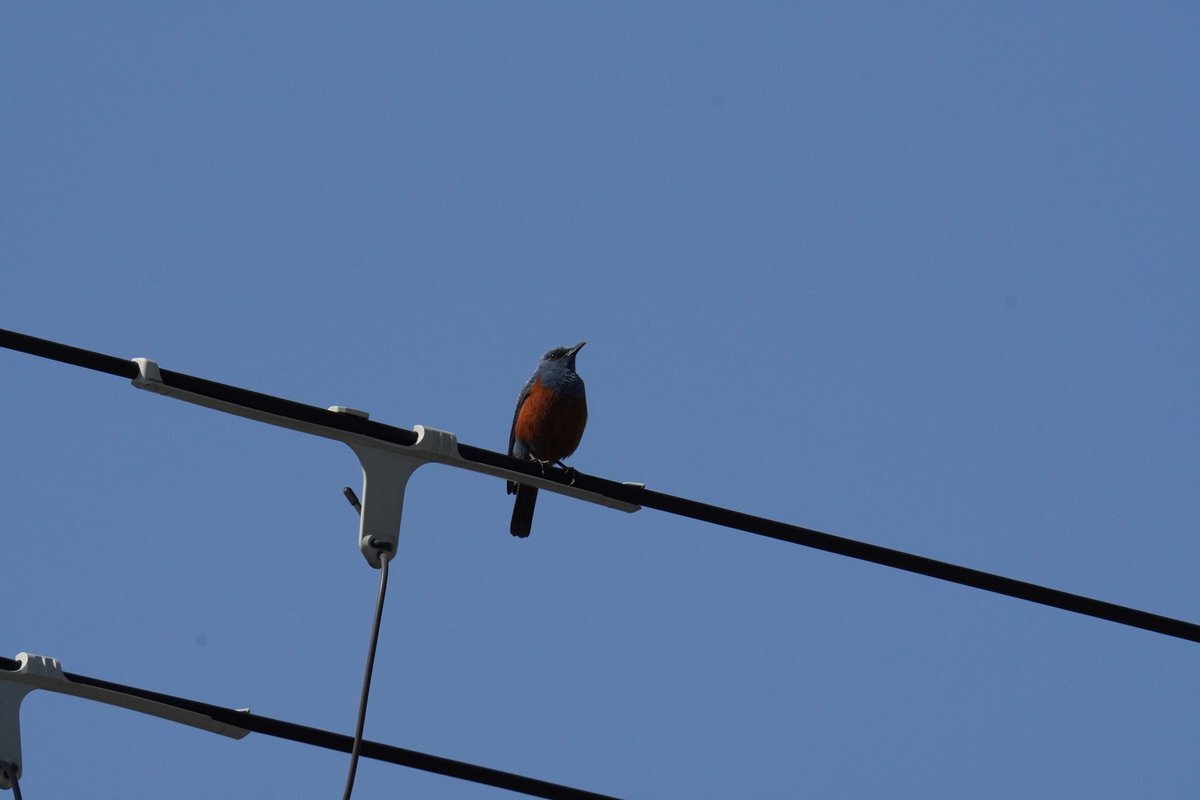
I was taking a walk near my home in Kansai, Japan. A clear, flute-like song came from somewhere above. I looked up. On the corner of a building, right at the top of an antenna, sat a blue bird. Its belly was a deep chestnut red. It was singing with its chest puffed out, as if the whole street was its stage.
“What on earth is that?”
Hi, I’m Haru from Isohiyo Note. That bird was a Blue Rock Thrush, or isohiyodori (イソヒヨドリ) in Japanese. It’s the bird that got my husband and me into birdwatching. Today I’d like to introduce it to you.
✨ A “blue bird of happiness” you can meet in town
In Japan, some people call this bird the “blue bird of happiness.” It comes from the old story The Blue Bird, where happiness turns out to be close to home.
That fits this bird perfectly.
You don’t need a mountain trip or a long hike to see it. It may be singing on the building next door.
The Blue Rock Thrush lives across Europe, Africa and Asia. But the birds in Japan look a little different. Most males here have a chestnut-red belly under their blue back. In Europe, males are blue all over. So if you’ve seen one in the Mediterranean, the Japanese version may surprise you.
⛰ From rocky cliffs to city rooftops
Here is my favorite part of the story.
The Japanese name isohiyodori roughly means “rocky-shore bulbul.” Iso means a rocky seashore. Hiyodori is the Brown-eared Bulbul, a very common bird in Japan.
By the way, it isn’t a bulbul at all. It just has a similar size and shape.
As the name says, this bird used to live on seaside cliffs. But over the past few decades, it has moved inland. Now you can find it in cities, far from any beach.
Why? Nobody knows for sure. But think about it from the bird’s point of view. Tall concrete buildings look a lot like cliffs. Rooftops and antennas are perfect places to sing. And there are plenty of nooks to build a nest.
To a cliff bird, a city might look like a giant rocky coast.
And it didn’t stop at the city. In my records, most sightings are inland, in Nara and Osaka, far from the sea. I’ve even seen one at Tateyama Station in Toyama, a mountain town at the gateway to the Northern Alps.
A “rocky-shore” bird in the mountains. The name doesn’t quite fit anymore!
♪ Follow the song, then look up
The easiest way to find one is with your ears.
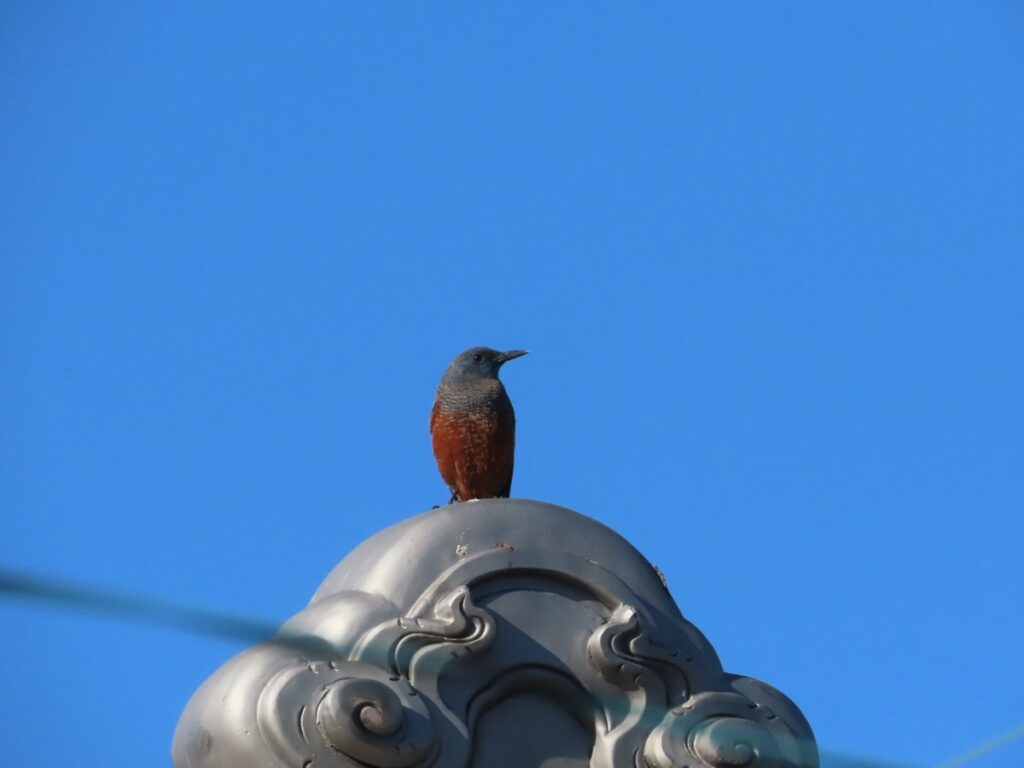
The song is clear, bright and full of variety. It almost sounds like a flute player warming up. Males sing from high places: rooftops, antennas, power lines, chimneys.
So when you hear a beautiful song in town, stop and look up. Check the highest point nearby. There’s a good chance a Blue Rock Thrush is standing there.
One of my favorite memories is from Koyasan, the sacred mountain in Wakayama. In the quiet temple grounds, one bird was singing from the very tip of a pagoda roof. The old wooden tower, the blue bird and that song. It felt like a scene from another time.
I just stood there and listened.
✨ Blue and brown: telling males and females apart
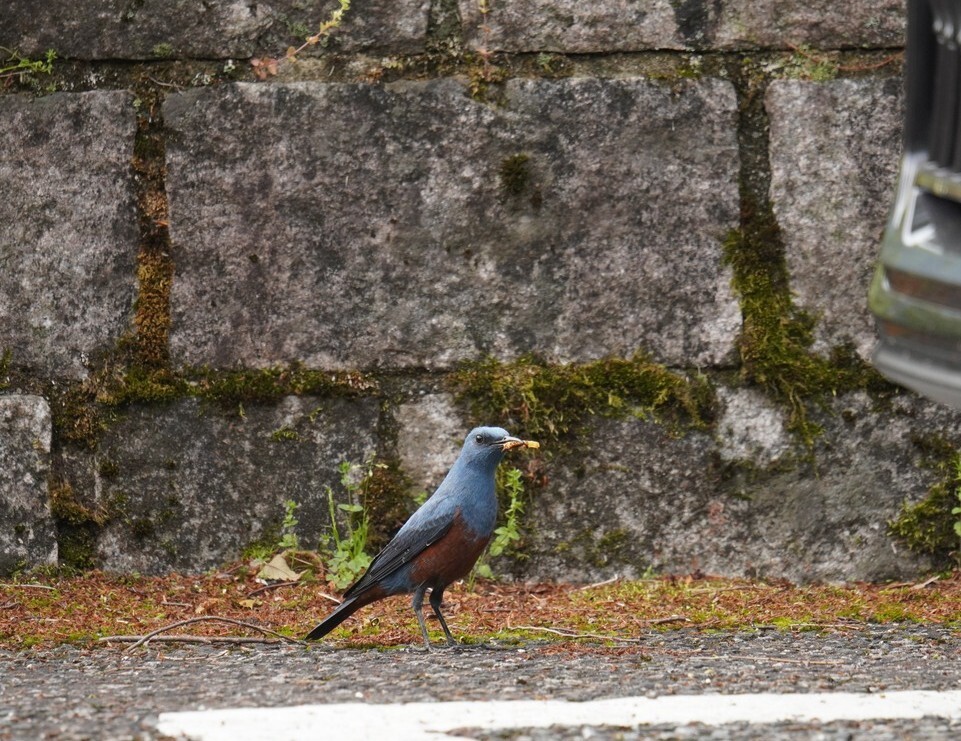
Males are easy. Blue head, blue back and that chestnut belly.
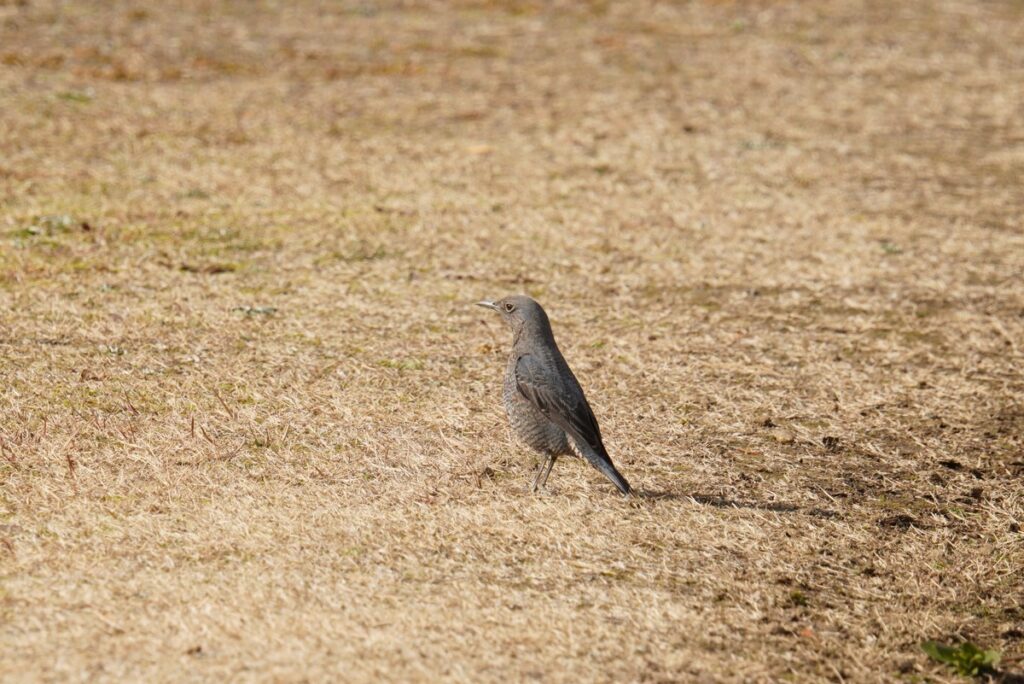
Females are much quieter in color. They are brownish gray with a fine scaly pattern on the chest. At first, I didn’t realize they were the same species!
I took this photo of a female in Nara Park one January. Yes, the park with all the deer. Most visitors only look at the deer, but birds like this are there too.
Here’s a fun fact. The blue of the male isn’t made by blue pigment. It comes from the tiny structure of the feathers, which reflects blue light. That’s why the color changes depending on the light and angle. In the sun it shines. In the shade it can look almost dark gray.
☀ A loner who loves a good meal
In my notebook, I have recorded Blue Rock Thrushes 78 times. And here’s what surprised me: I found them in every single month of the year. In Kansai, they don’t leave for the winter. They are our neighbors all year round.
In four years, I have almost never seen Blue Rock Thrushes in a flock. They are usually alone. They stand on their favorite spot, look around, sing, and fly off. I like that independent style.
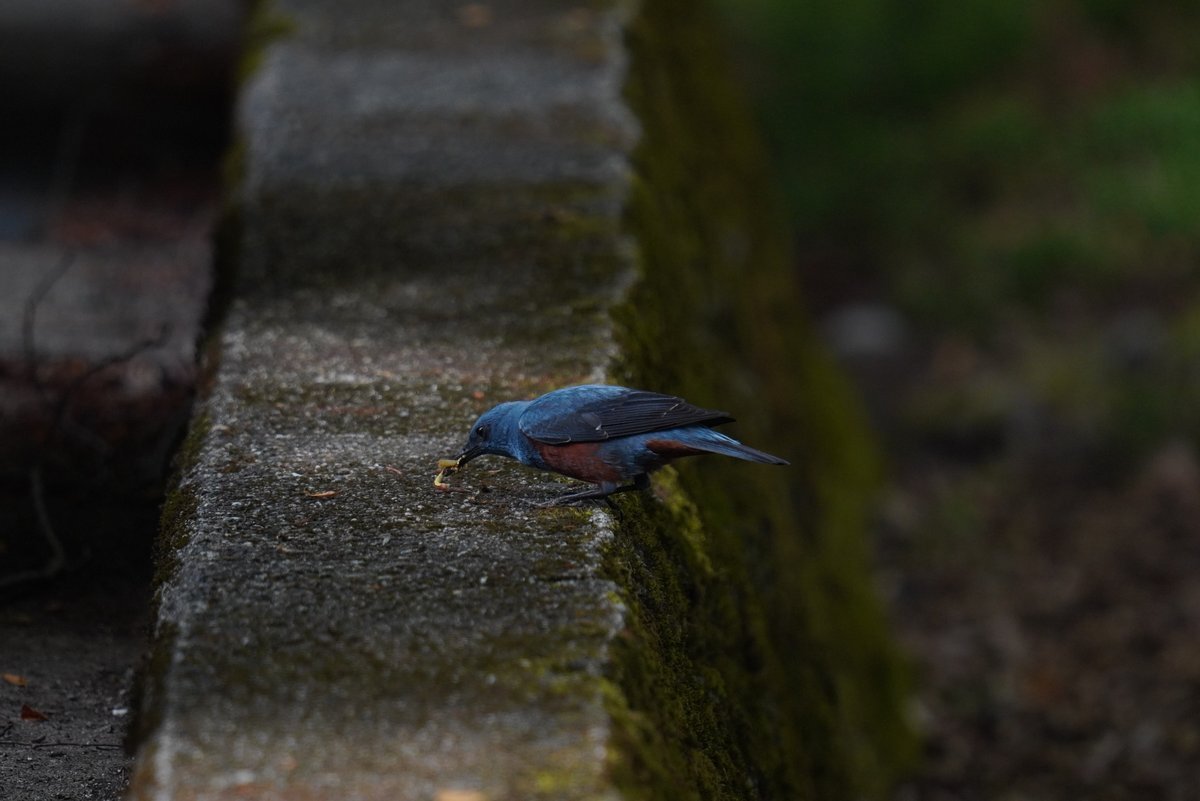
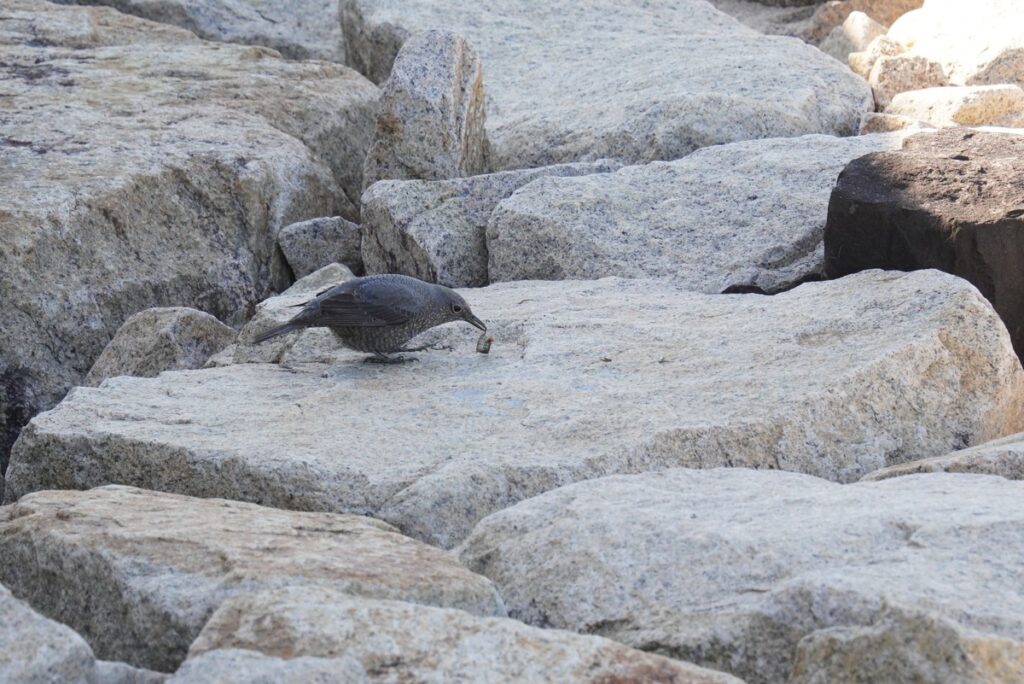
They eat insects, spiders and other small creatures. Near the sea, they even catch crabs. I once watched a female eating a crab at the mouth of the Otori River in Osaka. In May, I saw a male with an insect in its beak, probably for its chicks.
✈ Tips for seeing one on your trip to Japan
If you’re visiting Japan, here are some simple tips.
Where: Harbors, rocky coasts, and also city centers. Look at rooftops, temple roofs, bridges and power lines.
When: All year round. Spring is the best season, when males sing the most.
How: Listen first. Then look up at the highest point around you.
Size: About 23 cm (9 inches), a little smaller than an American Robin.
Fun fact: It is also the national bird of Malta, in the Mediterranean.
❓ Why this blog is called “Isohiyo Note”
Isohiyo is short for isohiyodori. And Note is my notebook of birds.
This one blue bird on an antenna started everything for us. Since then, my husband and I have spent four years watching and photographing wild birds around Kansai.
On this blog, I’ll share Japanese birds, the places we find them, and the little stories that come with them.
If you ever come to Japan, take a moment to listen on a city street. If you hear a flute-like song from above, look up.
Your own “blue bird of happiness” might be waiting there.
▶ Japanese Tit: The Little Bird That Talks in Sentences
*I use AI to help organize and polish the wording of my articles, but all observation records and photos are our own.